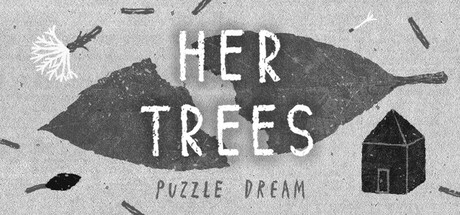
The biggest game in the series. 43 puzzles across a dreamlike space. The culmination of everything stone built across three games.

Click to start playing instantly · Free browser demo
Mouse: click & drag to move objects. Touch: tap & drag. Works on desktop and mobile. Free demo — full version on Steam ($3.99) and iOS.
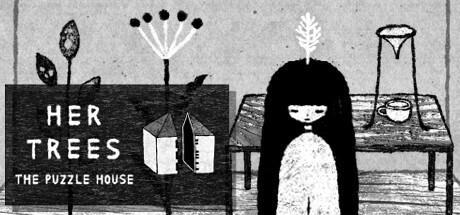
One room, half an hour, completely free. Where the series started.
Her Trees 2 — more rooms, deeper spatial thinking. Free demo.
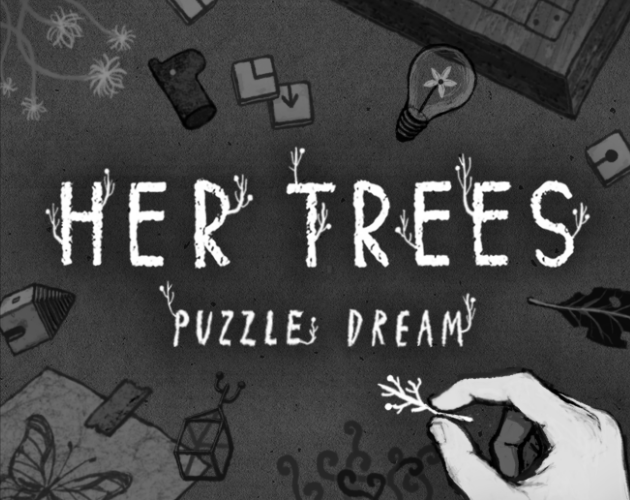
43 puzzles across a dreamlike space. The biggest game in the series.
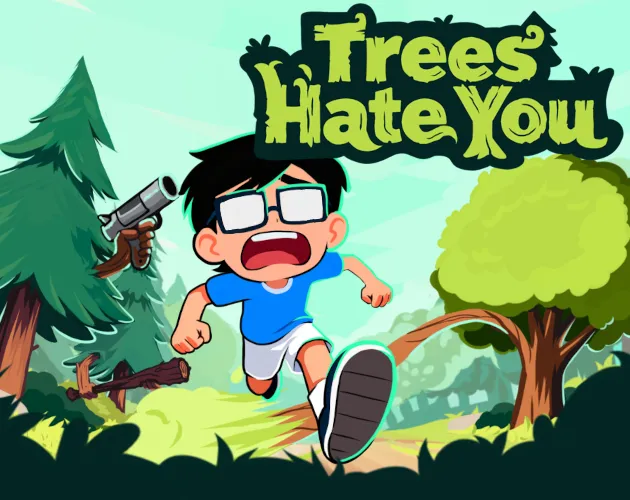
The forest wants you dead. Rage-comedy trap platformer.
Her Trees: Puzzle Dream is stone's third and largest game. After First Puzzle introduced the core idea and The Puzzle House stretched it, Puzzle Dream perfects it. 43 hand-crafted puzzles across a dreamlike, interconnected space. This is the one to play if you want the full Her Trees experience.
Every puzzle asks you to find hidden letters by moving, dragging, and overlapping objects. Paper over paper. Leaf under branch. Nothing snaps to a grid. You build the solution in physical space. The difficulty curve is gentle but deliberate — early puzzles teach the vocabulary, late puzzles ask for spatial reasoning you wouldn't have believed possible an hour earlier.
Hints unlock on a timer. The game quietly tracks how many you used, for no purpose other than your own curiosity. No penalty. No locked content. Just you, the room, and the quiet hum of the next puzzle waiting.
43 puzzles is more than First Puzzle and The Puzzle House combined. Every visual trick from the earlier games returns — paper layering, transparency, 3D occlusion, organic shapes, petal alignment — plus new ones that only appear here. The rooms are larger, the object interactions are deeper, and the late-game puzzles layer three or four spatial relationships in configurations you have to see to believe.
The same core loop from the earlier games — drag, overlap, discover. But Puzzle Dream moves you through four distinct modes with every puzzle: Observe the room and decide what to touch. Experiment by dragging and overlapping objects until letters surface. Resolve the sequence — find the right order for the grid. And when nothing makes sense, stuck mode kicks in until the hint timer saves you. Forty-three rooms, each one cycling through the same rhythm, never quite the same way twice.
"43 puzzles, every one hand-crafted. No filler. The late-game rooms had me staring at the screen wondering how stone keeps coming up with new visual tricks." — Steam ★★★★★
"Puzzle Dream is the reason you play the series. First Puzzle teaches, Puzzle House refines, but this one? This one is the destination. Worth every cent of $3.99." — itch.io ★★★★★
"The difficulty curve is perfect. Early puzzles feel clever but approachable. By puzzle 30 you're holding three spatial relationships in your head and rotating things at angles you didn't know existed." — Reddit ★★★★★
"98% positive on Steam is not an accident. This is one of the most thoughtfully designed puzzle games I've ever played, and it costs less than a coffee." — Backloggd ★★★★★
Over a thousand players have reviewed it, and the consensus is consistent: the game respects your intelligence. No tutorials, no hand-holding, no filler puzzles. Every one of the 43 rooms is hand-crafted to teach you something new about how to see. Players also praise the accessibility — the monochrome art and non-verbal design mean anyone can play, regardless of language, hearing, or color vision.
Most puzzle games give you rules and ask you to apply them. Puzzle Dream asks you to discover the rules yourself. Objects don't snap to grids. Nothing highlights when you hover. The game never confirms you're on the right track. You solve by observing, experimenting, and noticing — not by following instructions. It's closer to learning a visual language than completing a series of logic exercises.
No. The browser demo gives you a taste — the first several puzzles to see if the game clicks. The full version on Steam ($3.99) unlocks all 43 puzzles. There's also an iOS version. No subscription, no microtransactions — pay once, play everything.
Puzzle Dream might actually work better for you than for experienced puzzle gamers. Since it never explains itself, there's no assumed genre knowledge to trip over. No inventory systems to memorize. No established puzzle grammar to learn. You just look, drag, and try things. The early puzzles are gentle enough that complete beginners can find their footing.
On Steam, yes — standard refund policy applies (within 14 days, under 2 hours of playtime). Play the free browser demo first. If the core loop of dragging and overlapping objects doesn't grab you within the demo, the full game probably won't either.